Introduction
In industries where equipment is exposed to aggressive chemicals, acids, alkalis and demanding process conditions, selecting the right material for construction is one of the most important decisions. The performance, durability and safety of industrial equipment largely depends on how well the material matches the application requirements.
Materials such as HDPE (High-Density Polyethylene), PP (Polypropylene), and FRP (Fibre Reinforced Plastic) are widely used for manufacturing corrosion-resistant industrial equipment due to their excellent chemical resistance and application flexibility
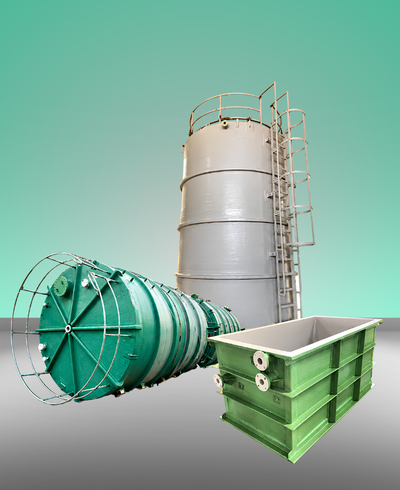
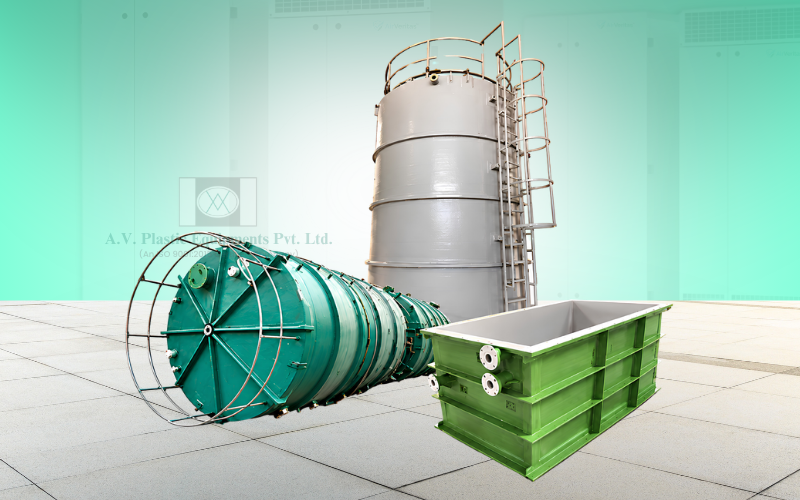
A.V. Plastic Equipments specializes in manufacturing HDPE, PP and FRP industrial equipment, including storage tanks, reaction vessels, mixing vessels, scrubber systems and customized process solutions designed for challenging industrial environments.
Understanding HDPE, PP and FRP Materials
HDPE Equipment: Reliable Chemical Resistance and Durability
What is HDPE?
HDPE (High-Density Polyethylene) is a thermoplastic material widely used in industrial applications where chemical resistance, durability and lightweight constructions are required.
A.V. Plastic Equipments manufactures HDPE equipment such as storage tanks and reaction vessels using HDPE “Spirall” and HDPE/FRP composite constructions.
Advantages of HDPE Storage Tanks and Equipment
HDPE equipment offers several benefits:
- Excellent resistance against a wide range of chemicals
- High durability and impact resistance
- UV-resistant properties in HDPE “Spirall” applications
- Suitable for applications involving acids, alkalis and corrosive chemicals
- Effective performance in low-temperature applications
HDPE “Spirall” construction is generally preferred for applications requiring UV resistance and chemical protection. It provides temperature resistance up to approximately 70°C and is also suitable for applications below 0°C.
PP Equipment: Suitable for High Temperature Applications
What is PP?
PP (Polypropylene) is another widely used engineering thermoplastic known for its chemical resistance and suitability for higher-temperature applications.
PP equipment is commonly used in:
- Chemical processing industries
- Pharmaceutical manufacturing
- Food and beverage processing
- Biotechnology applications
A.V. Plastic Equipments manufactures PP equipment in PP “Spirall” and PP/FRP composite configurations for various industrial applications.
Benefits of PP Industrial Equipment
Key advantages include:
- Excellent resistance to corrosive chemicals
- Better performance in higher temperature conditions
- Suitable for demanding process applications
- Lightweight and durable construction
PP material is preferred for applications requiring higher temperature resistance, with performance capability up to approximately 90°C.
FRP Industrial Equipment: Strength Combined with Corrosion Resistance
What is FRP?
FRP (Fibre Reinforced Plastic) is a composite material widely used for industrial process equipment due to its excellent strength-to-weight ratio and corrosion resistance.
FRP equipment is used across applications involving:
- Acids
- Alkalis
- Solvents
- Chemical processing environments
Single Composite and Dual Composite FRP Construction
FRP equipment can be designed using different composite structures.
Single Composite Construction
In single composite FRP equipment:
- The inner layer uses corrosion-resistant resin
- The outer FRP layer provides structural strength
This combination creates a corrosion barrier while maintaining mechanical stability.
Dual Composite Construction
Dual composite equipment combines FRP with materials such as:
- HDPE
- PP
- PVC
- PVDF
- ECTFE
- FEP
- PFA
These materials act as corrosion-resistant inner layers, while FRP provides structural reinforcement.
Why Choose Composite HDPE/FRP and PP/FRP Equipment?
Composite construction combines the advantages of multiple materials to create equipment suitable for demanding industrial processes.
For example, an HDPE/FRP Reaction Vessel combines:
HDPE Inner Layer
✔ Chemical resistance
✔ Corrosion protection
FRP Outer Structure
✔ Mechanical strength
✔ Structural stability
This combination helps industries achieve reliable performance where both chemical protection and structural strength are required.
Applications of HDPE, PP and FRP Industrial Equipment
HDPE, PP and FRP equipment are used across various industries, including:
Chemical Industry
Used for handling:
- Acids
- Alkalis
- Corrosive chemicals
- Hazardous substances
Pharmaceutical Industry
Applications include:
- Reaction vessels
- Mixing and blending vessels
- Scrubber systems
- Process equipment
Agrochemical Industry
Used for:
- Chemical storage
- Pesticide handling
- Fertilizer applications
Water Treatment and ETP Applications
Used for:
- Chemical storage tanks
- Effluent treatment processes
- Chemical handling systems
Steel and Metal Industry
Used in applications involving:
- Acid handling
- Pickling processes
- Corrosion-resistant equipment
These industries utilize A. V. Plastic Equipments solutions for storage, processing, mixing, filtration and emission control applications.
How to Select the Right Material for Industrial Equipment?
Choosing the right equipment material depends on several factors:
1. Chemical Compatibility
The material should withstand the chemicals being stored or processed.
2. Operating Temperature
Temperature requirements play an important role in selecting between HDPE, PP and FRP.
3. Process Requirements
Equipment design depends on whether the application involves:
- Storage
- Reaction
- Mixing
- Filtration
- Gas treatment
4. Equipment Configuration
Tank size, pressure requirements and process conditions influence the final equipment design.
The right question is not only:
“Which tank should we buy?”
The better approach is:
“Which material and construction are suitable for our application?”
Why Choose A. V. Plastic Equipments?
A. V. Plastic Equipments provides customized industrial solutions using HDPE, PP, FRP and composite materials.
The product range includes:
- HDPE Storage Tanks
- PP FRP Equipment
- Reaction Vessels
- Mixing & Blending Vessels
- Columns
- Scrubber Systems
- Nutsche Filters
- Composite Equipment
- Lined Equipment
With application-focused engineering and customized manufacturing capabilities, A. V. Plastic Equipments supports industries requiring reliable corrosion-resistant process solutions.
Conclusion
Selecting the right material for industrial equipment is essential for achieving long-term performance, safety and reliability. HDPE, PP and FRP each offer unique advantages depending on chemical compatibility, temperature requirements and process conditions.
By understanding application requirements and choosing the appropriate material construction, industries can improve equipment life, reduce maintenance requirements and ensure efficient operations.
FAQs
HDPE is commonly preferred for chemical resistance and UV-resistant applications, while PP is preferred for applications requiring higher temperature performance.
FRP composite tanks combine corrosion resistance with structural strength, making them suitable for demanding chemical applications.
These materials are widely used in chemical, pharmaceutical, agrochemical, textile, steel, water treatment and ETP industries.